By Andrew Bernard, JNS
That legal threshold “requires enough support to have some meaningful impact on the terrorist organization’s ability to achieve its goals,” a dissenting Fourth Circuit judge wrote. “Selling a hot dog to a terrorist would not count.”
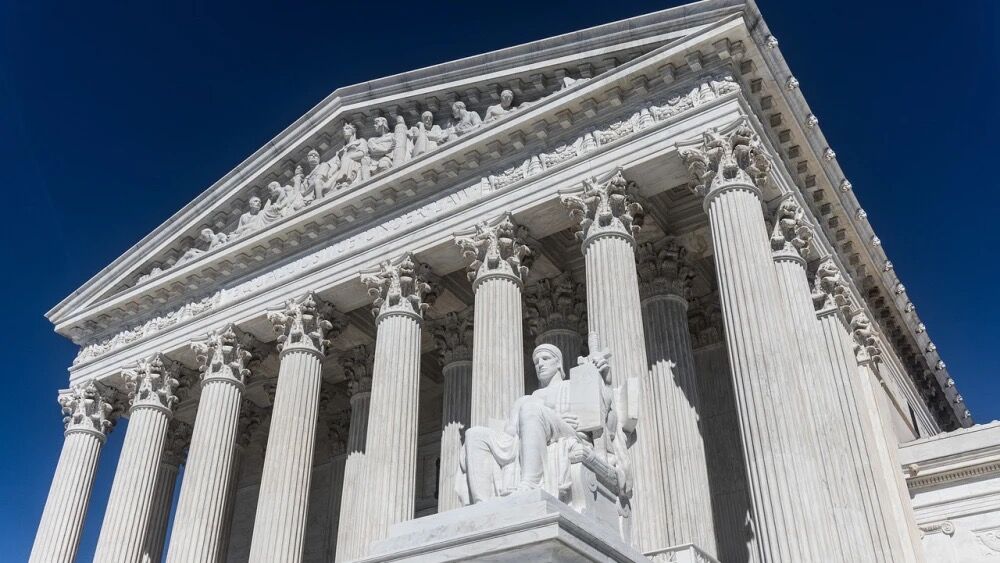
The U.S. Supreme Court agreed on Tuesday to hear a case that may define the boundaries of what constitutes “material support” for a terrorist organization.
The respondent, Izuchukwu Ozurumba, is a Nigerian national whose asylum claim in the United States was rejected after it was determined that, despite acting under duress, he had aided a terrorist group when he was forced to cook meals for the armed Nigerian separatist organization “the Unknown Gunmen.”
Ozurumba was deported from the United States to Nigeria in 2025, but the U.S. Court of Appeals for the Fourth Circuit vacated his removal later that year in a 2-1 decision after accepting his argument that someone forced to provide meals to terrorists has not meaningfully aided them.
“To say that every provision of food is support for terrorism is to collapse the statute into absurdity,” wrote James Andrew Wynn and Nicole Berner, both judges nominated by Democrats. “Under the dissent’s theory, a soup kitchen feeding the hungry—some of whom may be unsavory characters—would find itself guilty of aiding terrorism.”
“That’s not textual fidelity,” the judges ruled. “That is judicial overreach.”
In his dissent, Julius Richardson, a Trump nominee, argued that the majority had changed the meaning of “material support” to comprise acts that are “‘significant’ or even ‘essential’ to ‘the commission of terrorism.’”
The government subsequently appealed to the Supreme Court, which agreed on Tuesday to revisit the case.
The case could have far-reaching implications for the prosecution of alleged terrorists in the United States and their removal in immigration proceedings, like the one affecting Ozurumba.
Suspected terrorists are routinely charged with providing “material support” for a terrorist organization for things like buying a plane ticket or pledging themselves as recruits to groups like ISIS.
But the exact limits of what constitutes “material support” to a foreign terrorist organization have never been defined by law, and those statutes have long faced objections from civil liberties organizations.
Richardson argued that while the term is not self-defining, it has obvious limits that, in his view, Ozurumba crossed.
“Material support requires enough support to have some meaningful impact on the terrorist organization’s ability to achieve its goals,” Richardson wrote in his dissent. “For example, though food can constitute material support, selling a hot dog to a terrorist would not count.”
“Ozurumba did not run a hot dog stand that the Unknown Gunmen happened to stop by once or twice,” he wrote. “Rather, he acted as a private chef, providing three meals a day for over a dozen leaders of a terrorist organization—for months.”
The Supreme Court is expected to hear the case later this term.